2026-10-19 · Roberto Alvarez
Handling Wet Debris During Los Angeles Rainy Season
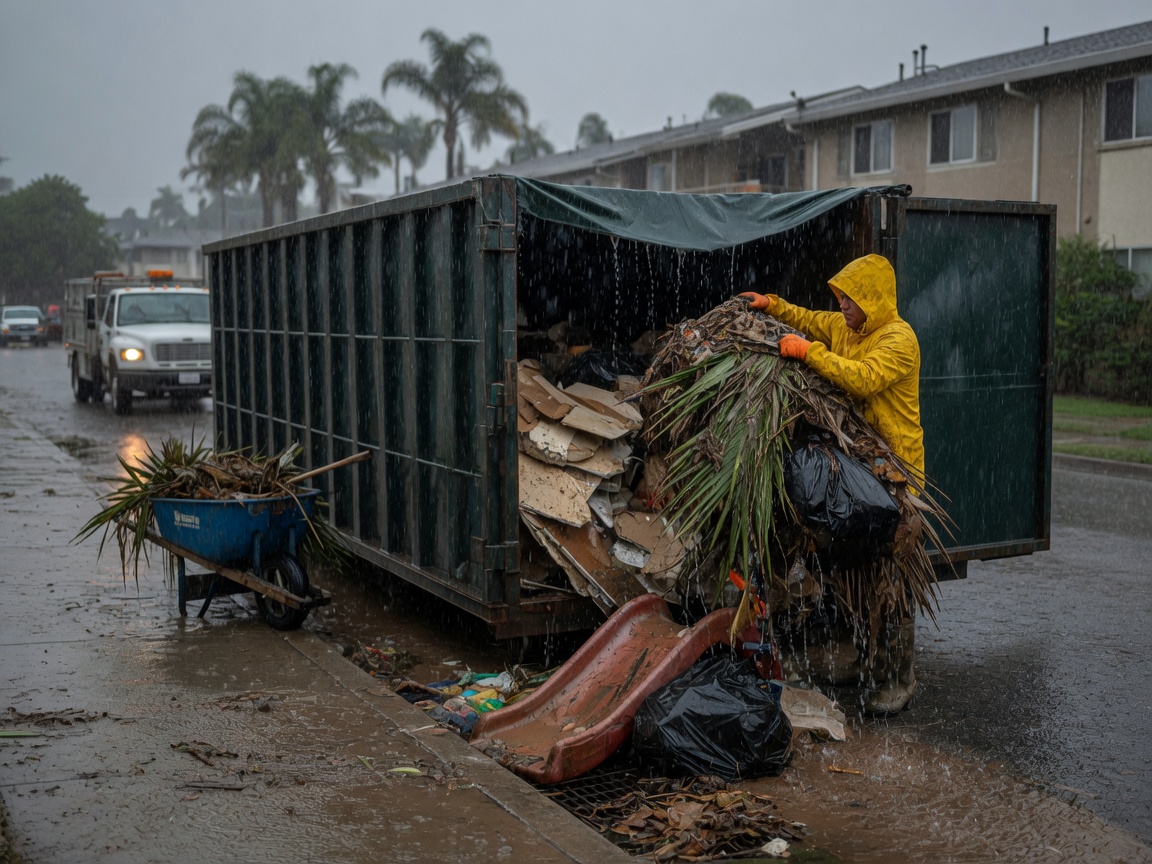
Los Angeles rainy season adds 20-40% extra weight to debris piles when cardboard, drywall, and wood absorb water, so cover loads immediately with heavy-duty tarps and schedule pickups within 24 hours of storms to avoid overweight fees on 20-yard and 30-yard containers.
How Mediterranean Climate Patterns Affect Debris Weight
Los Angeles has a Mediterranean climate with mild winters that still deliver concentrated rain from November through March. In neighborhoods such as Hollywood and Silver Lake, older Craftsman and mid-century homes produce renovation waste heavy on plaster and timber that soaks up moisture quickly. Once saturated, a standard 10-yard load can exceed the 4-ton limit common on most roll-off trucks serving Westwood and Echo Park. Operators check forecasts daily and advise clients to stage debris under cover the night before expected rain so the material stays lighter and drier for transport to regional landfills.
Tarping and Containment Steps for Wet Conditions
Secure 6-mil reinforced tarps over every open container using ratchet straps at four corners and mid-points. In South Central and Watts, where wind gusts accompany winter storms, add sandbags along the base to prevent flapping that lets water in. For residential jobs in Koreatown or East Los Angeles, break down wet drywall into smaller sections before loading so water drains rather than pools. Check the load each morning after rain; if standing water appears, drill small holes in the tarp edges to release it without soaking the truck bed during pickup.
Scheduling Around Rain Events in Key Neighborhoods
Los Angeles traffic and storm timing often collide, so book containers for early morning delivery in Downtown or Boyle Heights before afternoon showers hit. Same-day adjustments work best when clients call before 2pm on weekdays. In Santa Monica and Venice, beach-area moisture lingers longer, so allow an extra day for drying if debris sits near the coast. Pair this planning with the Dumpster Rental Size Guide for Los Angeles Home Renovations to choose 15-yard or 20-yard units that stay under weight even after light rain absorption.
Street Placement and Permit Realities During Storms
City rules in Los Angeles require permits for any container left in the public right-of-way, and rain can turn soil soft in places like Griffith Observatory overlooks or near Dodger Stadium. Place units on plywood sheets in driveways or on compacted gravel to prevent sinking. Review requirements in advance through the City Permit Requirements for Street Placement in Los Angeles so crews avoid last-minute moves when streets flood. In Pasadena and Glendale border zones, crews often shift containers to private property the day before heavy rain to maintain safe access.
Choosing the Right Container for Wet Debris Loads
Residential projects in areas like Culver City or Burbank benefit from 20-yard containers lined with cardboard sheets at the bottom to absorb initial moisture and keep loads stable. Avoid overfilling past the top rail; wet material compacts less than dry, so stop at the marked line. When debris includes roofing from older homes in Echo Park, request a lid-equipped unit to block direct rain. These choices keep loads compliant with landfill rules and reduce return trips for Los Angeles customers.